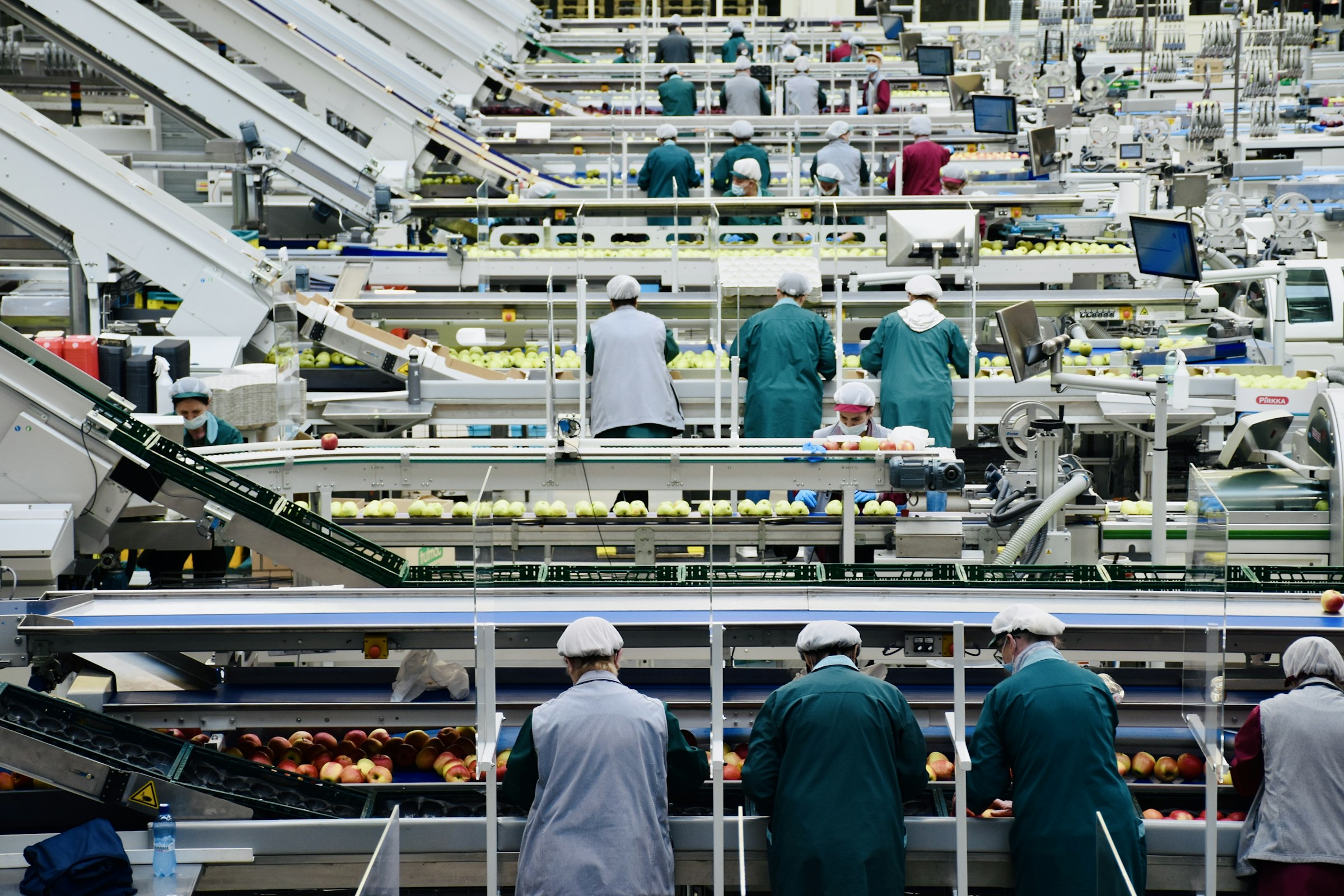


Manufacturing
We help manufacturers and processors cut energy use, lift plant performance and prepare their operations for automation and climate reporting.
Contact usWhat is changing
AEMO forecasts southern gas production capacity to fall by more than 46% between 2026 and 20301. From 2030 it projects southern supply gaps in most weather years1. The government plans a gas reservation scheme. LNG exporters would supply up to 20% of export volumes to domestic users, with obligations expected from 1 January 20282. Until the scheme is final, gas use per unit of output is the lever you control. Skills are the second limit. In the June quarter 2026, employers filled 55.7% of technician and trades vacancies, against 69.5% across all occupations3. Maintenance and automation draw on the same trades.
Mandatory climate reporting is phased by size, and mid-sized manufacturers are next. Its second tier covers financial years starting on or after 1 July 20264,5. A third tier follows from 1 July 20274. It covers entities at or above two of three size tests: $50 million revenue, $25 million assets or 100 employees4. Each reported figure needs a trail back to your meters, fuel records and supplier data.
Where we help
Gas and power costs your prices do not cover
We measure energy use by line, process and product, so you see where gas and power go. With your engineers we cost the options, including fuel switching, and order them by payback.
Lines that lose hours to stops and changeovers
We watch how each line runs with operators and maintenance leads, and find where it stops, waits and changes over. Then we redesign planning and maintenance routines so your trades staff prevent failures instead of chasing them.
Automation that outruns the people to run it
Before you buy, we assess what each automation step needs in data, skills and maintenance cover. Then we sequence the work with training and hiring, so the equipment you install keeps running.
Capital cases that assume full output
We measure what your lines really make before you commit capital. With your finance and operations leaders we build the case for each investment on that baseline, with every assumption traced.
Emissions figures you cannot trace
We build your decarbonisation plan, and the data flows behind climate reporting, so each figure traces to its source. Assurance stays with your auditor.

Tested on your line
Each plant runs differently, so we start on the floor, not with a template. We learn how your lines run today, what they make and where they lose time. With your executive we agree what must change, then shape the work to your products, shifts and systems.
Your production, maintenance, engineering and finance staff work alongside ours from the first week. We trial each change on one line, measure it against the baseline and adjust before it spreads. We stay through rollout. Together we build the routines, shift reports and skills, so your supervisors run them without us.
Manufacturing insights


Sources
- Australian Energy Market Operator (AEMO). Gas Statement of Opportunities, March 2026, for Australia's east coast gas market (Executive summary; Table 8). Period: forecasts to 2045; southern production capacity 2026 to 2030, from 318 PJ to 170 PJ; supply gaps from 2030. Accessed 7 October 2026.
- Department of Climate Change, Energy, the Environment and Water (DCCEEW). Gas Market Review and reforms (last updated 29 September 2026). Period: domestic gas reservation scheme; supply obligation of 20% of annual LNG export volumes, which the regulator may reduce; obligations expected from 1 January 2028; draft legislation to be introduced to parliament in 2026. Accessed 7 October 2026.
- Jobs and Skills Australia. Employer Activity Insights, interactive table (formerly the Occupation Shortage Report; page last modified 22 September 2026). Period: June quarter 2026, national; vacancy fill rate of 55.7% for technicians and trades workers and 69.5% for all occupations, from the page's data download, eai_-_table_data.csv. Accessed 7 October 2026.
- Australian Securities and Investments Commission (ASIC). Regulatory Guide 280 Sustainability reporting (31 March 2025), Table 2, "Commencement of sustainability reporting requirements". Period: annual reporting periods starting on or after 1 July 2026 (Group 2) and 1 July 2027 (Group 3), with the size tests for each. Accessed 7 October 2026.
- Treasury. Climate-related financial reporting and guidance (web page, no date shown). Period: reporting in stages for financial years starting on or after 1 January 2025, 1 July 2026 and 1 July 2027. Accessed 7 October 2026.
Start with a conversation.
Tell us what you need to change. We will show you how we would approach it.
Contact us